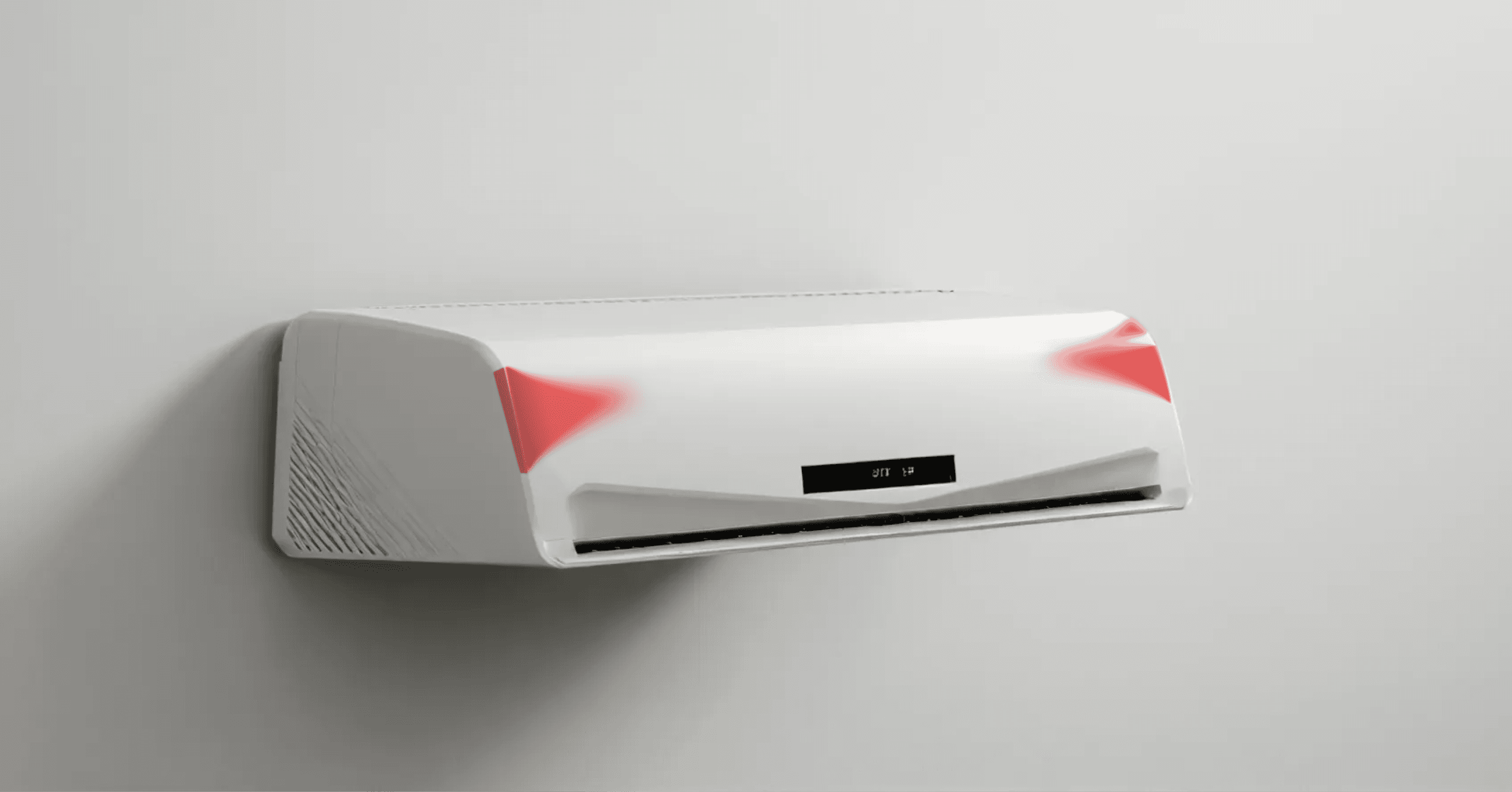
The business needed a low-cost AC. The users needed to trust that it wouldn't cost them more in the long run. That gap is where the design opportunity lived.

We landed on a central question:

Problem Framing

How might we reduce energy consumption not through expensive hardware, but through user behaviour?

How might we reduce energy consumption not through expensive hardware, but through user behaviour?

This reframe was important. Subros couldn't match LG or Samsung on AI optimization or occupancy sensing at this price point. We are just building from scratch though we have facilities and hands on experience being the vendors to major players. But what they could do that what nobody in this segment was doing well? That could be help users understand their own consumption in real time and give them the tools to act on it.

The competitive analysis confirmed this. Every major brand had smart apps and AI features, but they were all built for users who already understood energy units, billing cycles, and efficiency modes. The first-time AC buyer in a Tier 2 city? Completely left out.

CONCEPT 2

Budget setup

AC on normal run

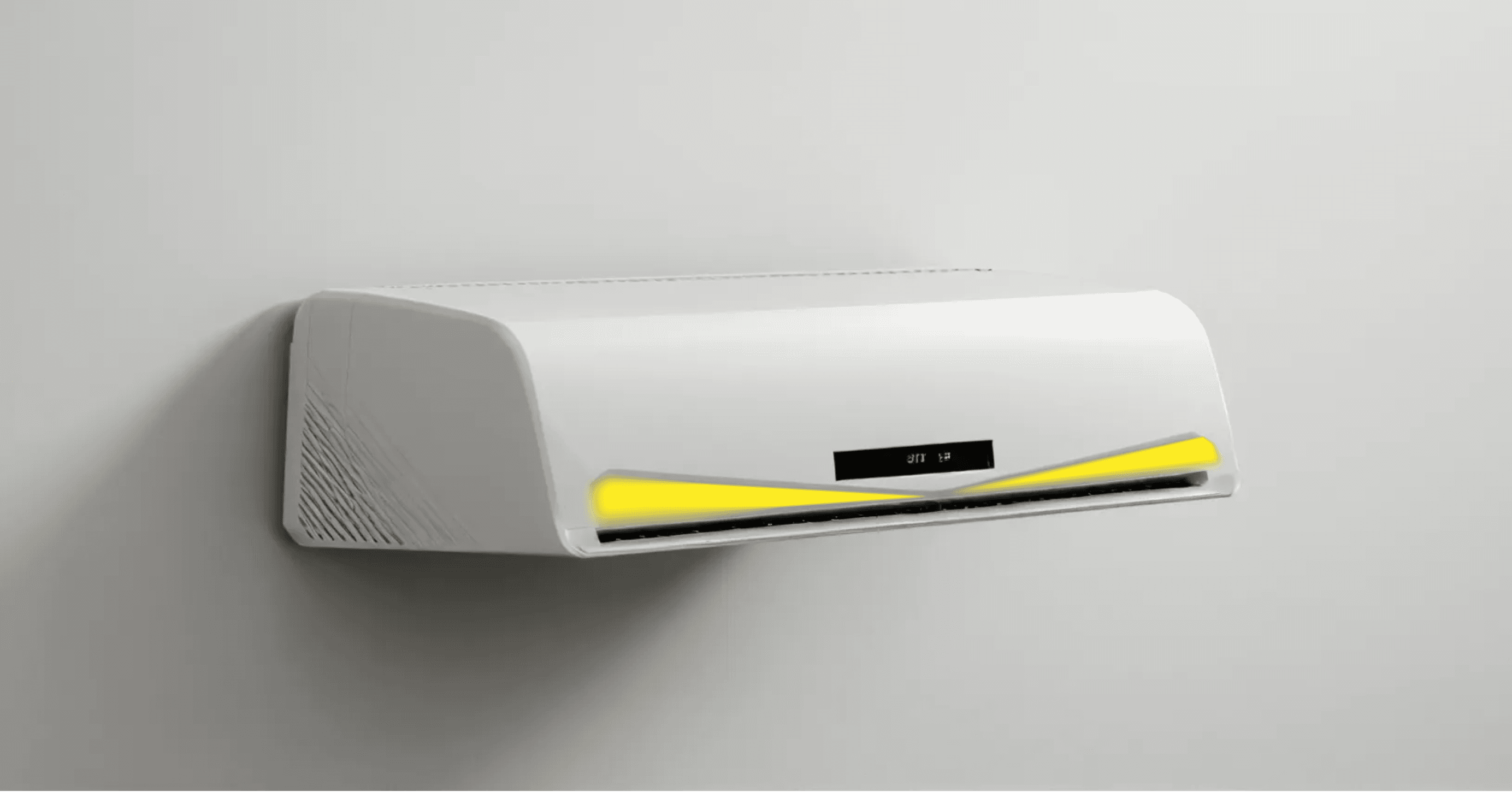
Indicator turns organge

Indication
(User action)

100%

60%

30%

10%

Role

Role

Design Researcher and Designer

Design Researcher and Designer

Timeline

Timeline

3 months

3 months

Team members

Team members

Saurabh Suman (PM),

Yogendra Khushwah (PM)

Saurabh Suman (PM),

Yogendra Khushwah (PM)

Energy consumption

Energy consumption

Your consumption is lesser compared to last month

Your consumption is lesser compared to last month

Today

Today

Week

Week

Month

Month

Mar 1

Mar 1

Apr 1

Apr 1

Today

Today

0kwh

0kwh

440

kwh

440

kwh

350

kwh

350

kwh

-

-

Feb

Feb

-

-

Mar

Mar

Project Overview

Subros, that quietly powers the AC systems of some of India's biggest car brands decided to launch their own residential air conditioner, the challenge wasn't just engineering. It was about entering a ₹3 billion market where trust, affordability, and habit were already deeply set.


I joined as the Design Researcher on a small, cross-functional team. Our brief was to design a product that could sit in the ₹15,000–20,000 range, feel premium despite minimal components, and actually be manufacturable within Subros' existing facility.

That last constraint was the one that kept things honest. My job was to figure out: who is this really for, and what do they actually need?

Research Process

insights

insights

These two groups turned out to have very different relationships with cooling, and that gap became one of the most interesting parts of the research.

Non-AC users weren't resistant to the idea of comfort. They were cautious about the cost. Unreliable power supply, rising electricity bills, and a lack of clarity on what running an AC actually costs per month were the real friction points.

Meanwhile, existing users were frustrated by something quieter: they had no idea how their daily habits were affecting their bill.


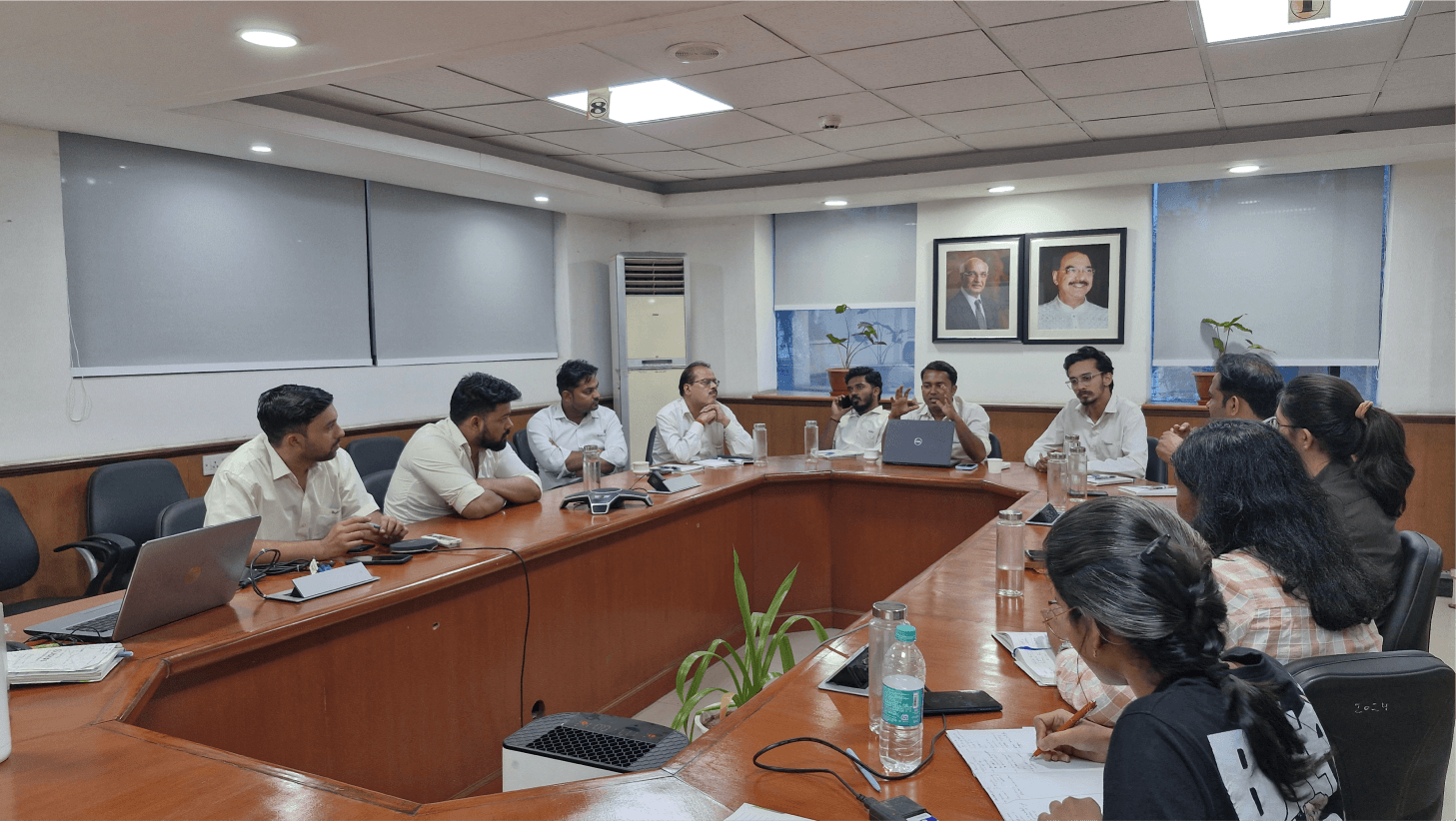
I also sat down with dealers and servicemen, who gave us a ground-level view of what breaks, what confuses customers, and what questions they hear repeatedly at the point of sale.

These two groups turned out to have very different relationships with cooling, and that gap became one of the most interesting parts of the research.

Non-AC users weren't resistant to the idea of comfort. They were cautious about the cost. Unreliable power supply, rising electricity bills, and a lack of clarity on what running an AC actually costs per month were the real friction points.

Meanwhile, existing users were frustrated by something quieter: they had no idea how their daily habits were affecting their bill.


I also sat down with dealers and servicemen, who gave us a ground-level view of what breaks, what confuses customers, and what questions they hear repeatedly at the point of sale.

View coding breakdown

Problem Framing

Design Decisions & Concepts

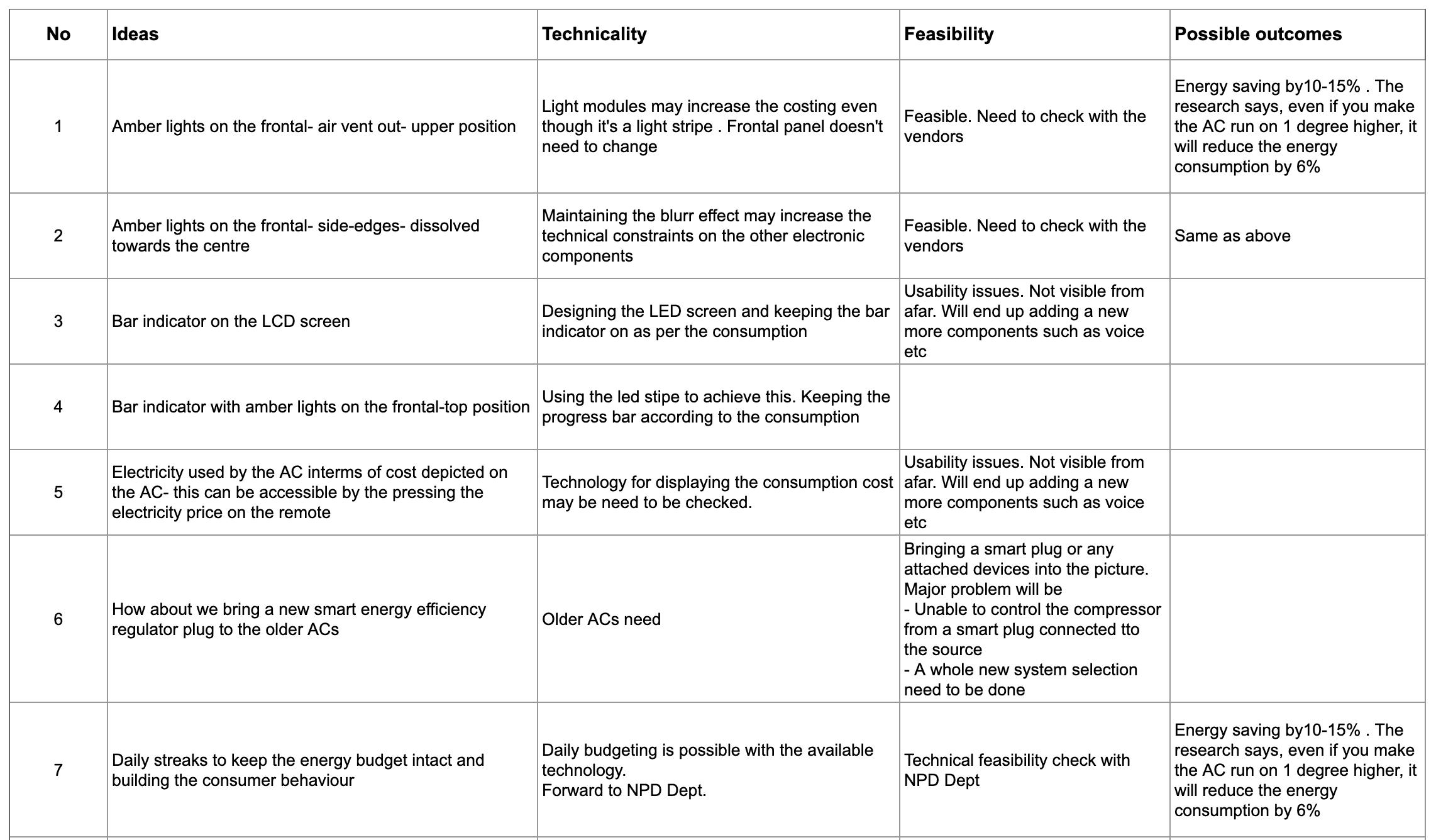
We explored ideas across the physical product and the companion app, always filtering through two lenses:

Is this manufacturable?

Does this actually change behaviour?

Budget setup

Budget setup

AC on normal run

AC on normal run

Indicator turns organge

Indicator turns organge

Indication
(User action)

Indication
(User action)

100%

100%

60%

60%

30%

30%

10%

10%

CONCEPT 1

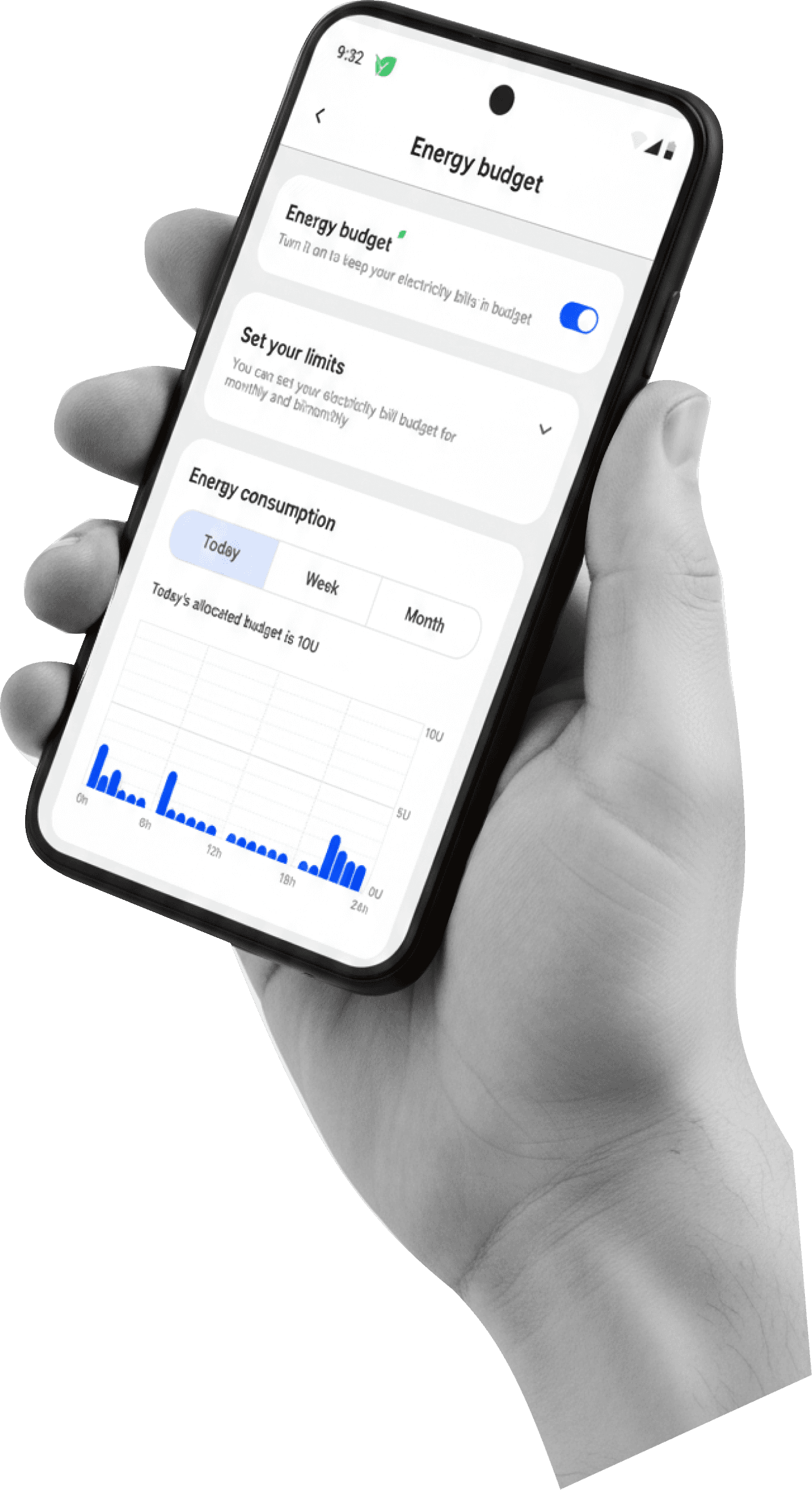
On the app side, designed an Energy Budget feature,

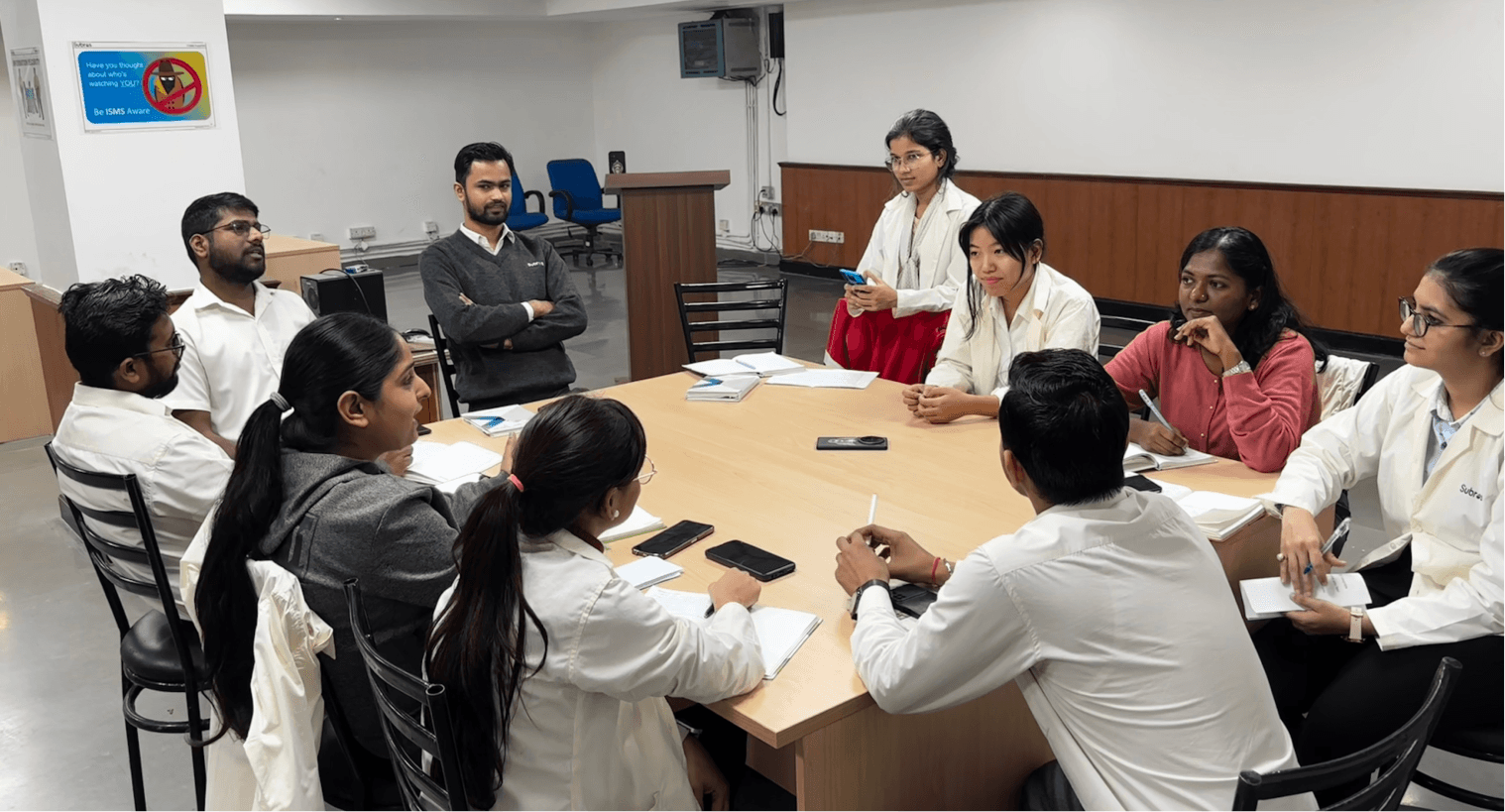
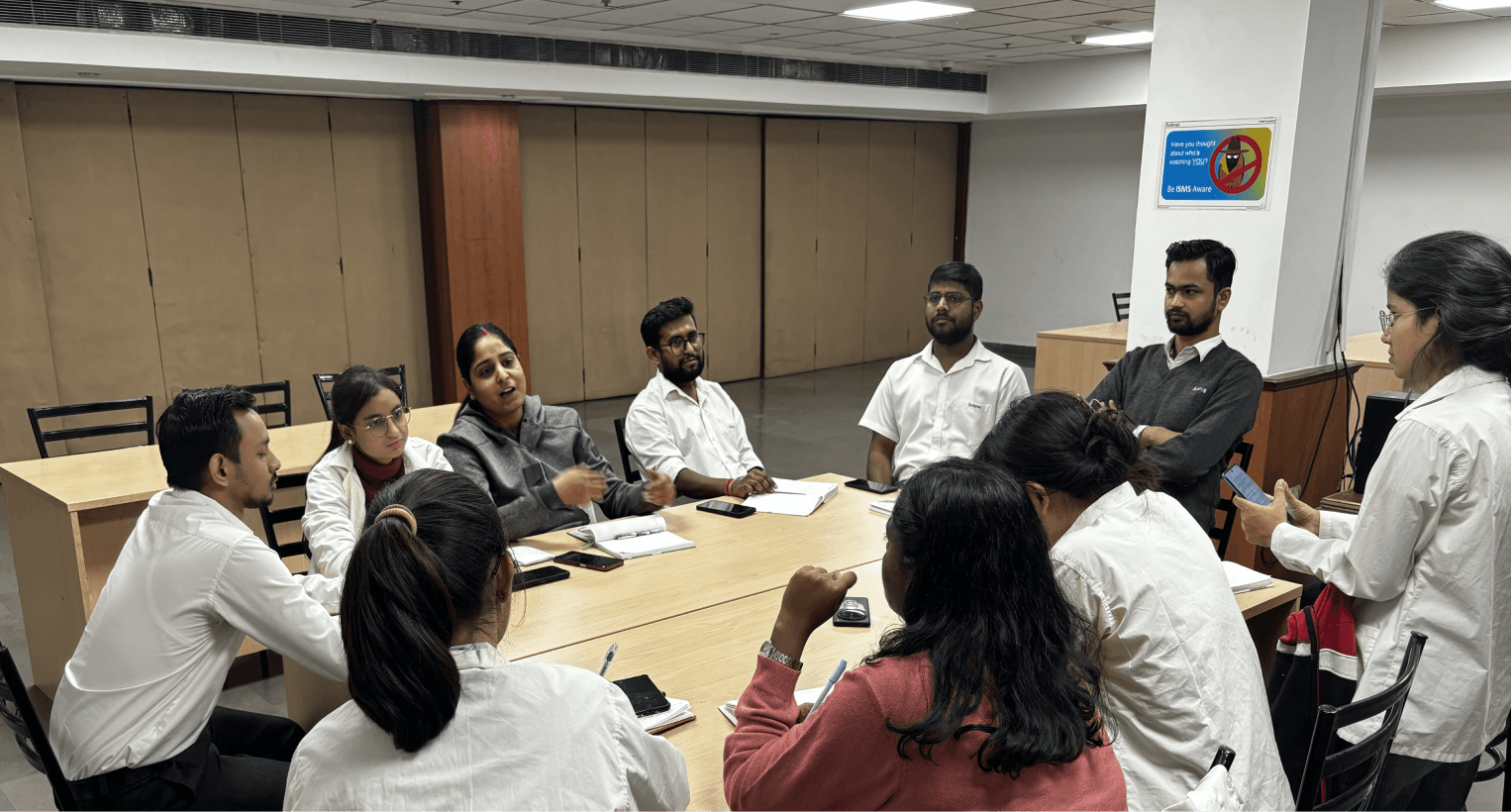
We had 5 weeks and a lot of assumptions to pressure-test. I started with two focus group studies :

One with existing AC users,

one with people who didn't own an AC yet.
CONCEPT 2

Budget setup

AC on normal run

Indicator turns organge

Indication
(User action)

100%

60%

30%

10%

These two groups turned out to have very different relationships with cooling, and that gap became one of the most interesting parts of the research.

Non-AC users weren't resistant to the idea of comfort. They were cautious about the cost. Unreliable power supply, rising electricity bills, and a lack of clarity on what running an AC actually costs per month were the real friction points.

Meanwhile, existing users were frustrated by something quieter: they had no idea how their daily habits were affecting their bill.


I also sat down with dealers and servicemen, who gave us a ground-level view of what breaks, what confuses customers, and what questions they hear repeatedly at the point of sale.

I talk, let's talk?

Made with love @2026